
Alumni Legacy Series: Kevin Sandoval-Casasola

SIPA’s legacy spans over five decades, and there are hundreds of Filipino Americans who can say SIPA has had a lasting impact on their lives. But what about the people who have shaped SIPA and laid down the foundations for today’s Historic Filipinotown and beyond? This is the focus of our Alumni Legacy series.
Kevin Sandoval-Casasola's journey to SIPA weaves through multiple cities, educational institutions, and a deepening commitment to Filipino community service. A dual master's student in Asian American Studies and Social Welfare at UCLA, Kevin (he/they) traces his roots to Manila and Bataan.
Kevin's family story reflects the typical forces of migration experienced by many Filipino families. His father grew up in Tondo, Manila, and met Kevin's mother while both taught at Mapua Institute of Technology. Encouraged by his grandfather, Kevin's father enlisted in the U.S. military in the 1980s, becoming one of the last generations of Filipinos to join after the Vietnam War. The family settled first in Long Beach, then moved to San Diego, where Kevin was born at Balboa Hospital. Like many Filipino military families seeking homeownership, they eventually relocated to Murrieta.
Growing up in Temecula defied stereotypes of hot air balloons and wineries. Despite its suburban character, the area boasts a strong Filipino community, connected through churches and employment at Pechanga and local silicone chip factories. Kevin notes. "For a small town like Temecula, we have three Filipino and Asian grocery stores."
Discovering Filipino Activism at UCLA
Kevin's path to SIPA began at UCLA, where he attended as an undergraduate. At UCLA, he discovered the rich history of Filipino activism and organizing, particularly through Samahang Pilipino and the network of Filipino student organizations.
"It was through that activism that I really developed my own political and cultural identity," Kevin reflects. "That caused me to find my purpose and sense of contribution to the world in Filipino community service and service of others."
This discovery launched Kevin into various youth development roles: substitute teaching after graduation, consulting work in the Philippines for a year, and serving as a teaching artist in Los Angeles County. Each experience built toward his eventual role at SIPA, which began in 2023 as a community engagement coordinator before transitioning to youth development. He left SIPA in 2025 to complete his master's degree.
Finding Home in Historic Filipinotown
Kevin's introduction to Historic Filipinotown came through a Samahang Pilipino internship field trip during his time at UCLA. Kuya Al, working with Eddy Gana through Pro People Youth and PCOR, led a walking tour for UCLA students that opened Kevin's eyes to California's Filipino history.
"That was the first time I recognized that, oh, we do have an actual written historic history here in California," Kevin says. Walking through the neighborhood, frequenting Bahay Kubo, and especially visiting Unidad Park and its mural celebrating Filipino legacy, Kevin felt at home in a different way than at UCLA. "At UCLA, it's really easy to feel at home in a peer group sort of way, but you're kind of separated from families and a larger sense of community."
His direct connection to SIPA began in college when he volunteered as a dance instructor for the Filipino Summer Program in the South Bay area. Wanting to learn more than what YouTube videos could teach, Kevin and fellow instructors received an offer from Joel Jacinto, a mentor who had extensive experience in Filipino dance through his involvement with Kayamanan ng Lahi. Kevin didn't even realize Jacinto was SIPA's executive director at the time.
That first visit to SIPA's old building left a lasting impression—a maze-like structure with rich history held in every crevice, crack, brick, and stain. After graduation, Kevin's relationship with SIPA continued to grow through “Whacking Wednesday”, a dance organization that held sessions at SIPA, demonstrating the organization's commitment to cultivating not just Filipino community but the broader dance community as well.
A colleague then sent Kevin the job application for community engagement coordinator. He was leaving previous nonprofit work and looking for something new. The role suited him perfectly, and he already knew many staff members, including a UCLA peer who would become his manager. "All that kind of came together to get me to finally be working as a staff member—from a volunteer and a recipient of services to then someone actually getting to contribute to the work that SIPA does."
The People Who Make SIPA
Working at SIPA taught Kevin about building community and practicing patience. Jeff Burbulys, now Chief Program Officer, brought extensive expertise from education and other organizations. Executive Director Kimmy Maniquis demonstrated leadership that puts people first. These relationships created a deep sense of safety, community, and family—a word Kevin uses deliberately, despite its sometimes toxic connotations in work settings.
"The relationships that I made, those are people that I call family, for sure, that I would be down for," he says. "Just in the sense of creating a wonderful professional space to work in—it's not devoid of its challenges, and being a non-profit, you're tied to different incentive structures that get in the way of what the work looks like, unfortunately."
SIPA gave Kevin the confidence to apply for his master's degree in Asian American Studies and Social Welfare. "If I didn't have the experience I had at SIPA, the ways that I learned, 'oh, this is the kind of work I really love,' I don't think I would have connected the next steps in my career."
Beyond professional development, SIPA connected Kevin to a deeper narrative about Filipino history and identity. His research in school extended into SIPA and Historic Filipinotown, uncovering the story of Uncle Roy, SIPA's origins from the Filipino Christian Church, and the cultural touchpoints woven throughout the neighborhood. Learning that Uncle Roy was also a social worker who became a professor resonated deeply.
"It was cool to see parts of myself reflected in the kind of work that is at the foundation of what SIPA does," Kevin reflects. Though he acknowledges that this historical knowledge isn't always accessible and required digging through archives, uncovering and sharing it made him feel even more connected to SIPA's work.
Seeing Impact in Real Time
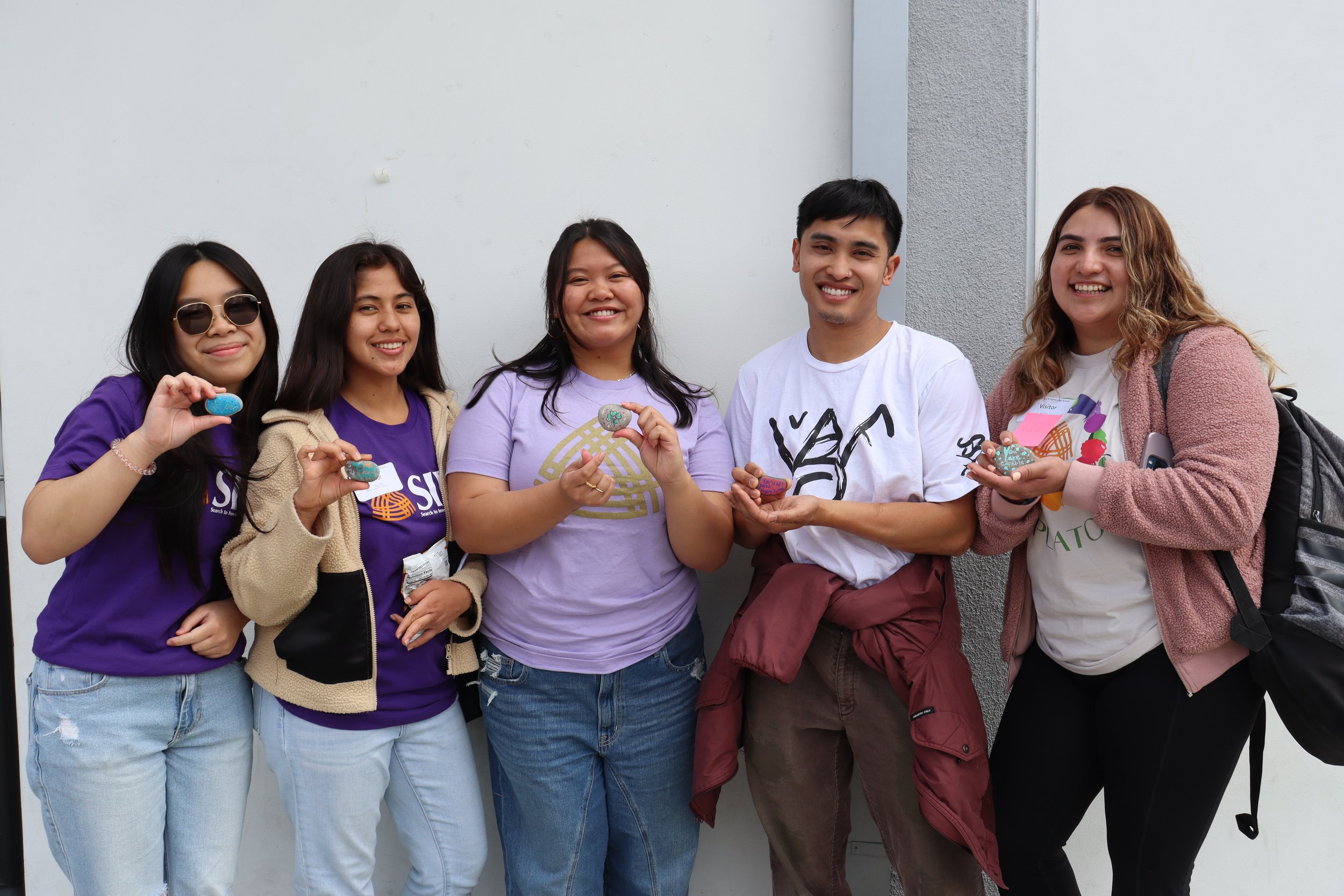
SIPA's impact extends widely within the community. For young people and college students, SIPA serves as the flagship Filipino community organization in Los Angeles and is recognized nationally. The organization distinguishes itself through its intergenerational dynamic, incorporating youth voices while honoring the wisdom of older generations. "Not saying that it always happens perfectly, but there's always a concerted effort to have synergy in an intergenerational space."
One of his favorite programs was the youth mental health initiative called “Walang Hiya - Rising Above Shame”, which recruited college volunteers to deliver a 10-to-12-week mental health curriculum throughout the summer and school year in Historic Filipinotown.
"Getting to see youth grow from that program, young people move through from beginning to end, seeing where they end up—the type of confidence, the type of cultural knowledge, connection that they have towards each other," Kevin says. He watched volunteers follow the same path he did, transitioning from program participants to staff members. "Which is a direct impact on those individuals' lives of finding out who they are, finding out what they want to contribute, what their purpose is, and then SIPA having an opportunity or position to offer them where they can do that work."
Youth Are Already Ready to Lead
Kevin's philosophy on youth development centers on a fundamental belief: young people are already ready to lead. "They're ready to learn, they're ready to step into something larger," he explains. While the current political climate forces youth to take up space and confront harsh realities, Kevin argues the problem isn't youth capability but adult interference. "I believe that it's often the adults that get in the way. Because youth are ready, they just a space to explore what that looks like." A saying he credits Beatrice Avanceña, the current Youth Leadership Coordinator at SIPA. “Her leadership and work with youth is a big reason why I believe in what I do.”
SIPA excels at not getting in the way, giving youth space to step into their power—an approach rooted in the organization's DNA since Uncle Roy started it with youth programs in mind. "SIPA does a great job of continuing to flatten the sort of power dynamics that are present between nonprofits and youth, and really giving youth and young people a voice, direction, opportunities to really grow into," Kevin says.
Resilience Through Crisis
When asked about the future of SIPA and Historic Filipinotown, Kevin acknowledges the challenging reality of 2026—political strife, daily crises, and ICE raids, to name a few. Yet his optimism persists, rooted in SIPA's 50-year history. "This isn't the first time that SIPA has experienced challenges, or that the world hasn't experienced challenges." While Kevin views resilience as "a double-edged sword"—requiring endurance through hardship—SIPA's resilience is baked into the organization's DNA.
"If there's anything I've seen through SIPA the past three years, it's their ability to be flexible and agile and led by amazing people," Kevin says, emphasizing this includes not just staff but also youth who returned to programs year after year. When youth completed available programs, SIPA created new opportunities rather than dismissing them. "They decided, 'hey, we're gonna make opportunities happen for you because you deserve it, and you want to be here."
For SIPA's legacy to continue, he believes the organization must keep building power in the community and cultivating leaders. "That's what SIPA is working towards—continuing to build power in the community, find and cultivate leaders, and do so in a real and impactful way."