
Alumni Legacy Series: Joselyn Geaga-Rosenthal
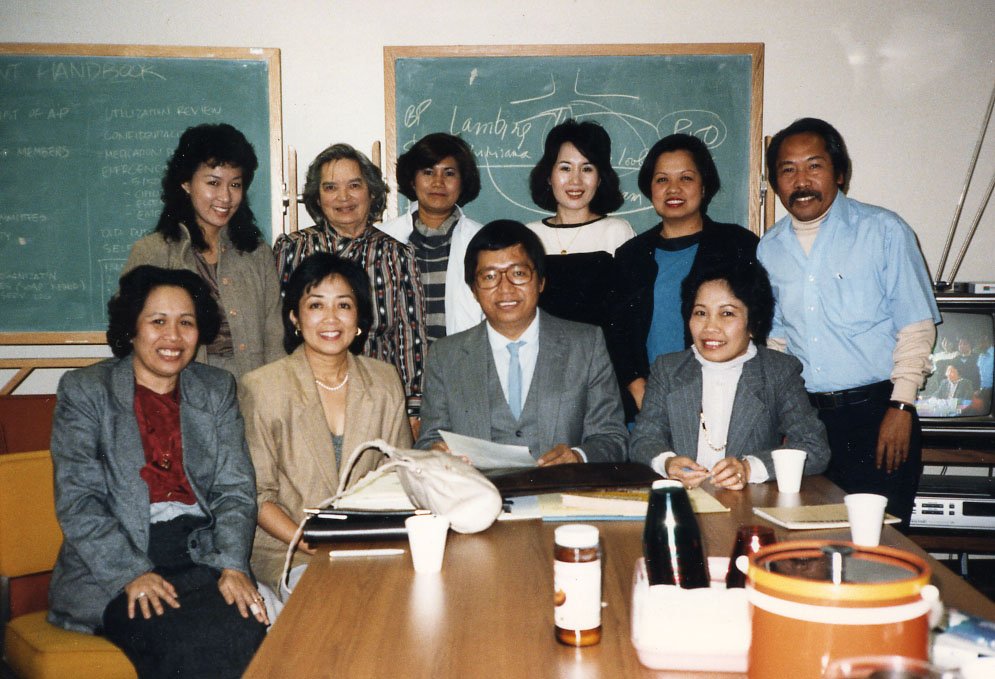
Joselyn Gaega-Rosenthal (sitting down, second on the left), alongside other SIPA members in the 80’s.
SIPA’s legacy spans over five decades, and there are hundreds of Filipino Americans who can say SIPA has had a lasting impact on their lives. But what about the people who have shaped SIPA and laid down the foundations for today’s Historic Filipinotown and beyond? This is the focus of our Alumni Legacy series.
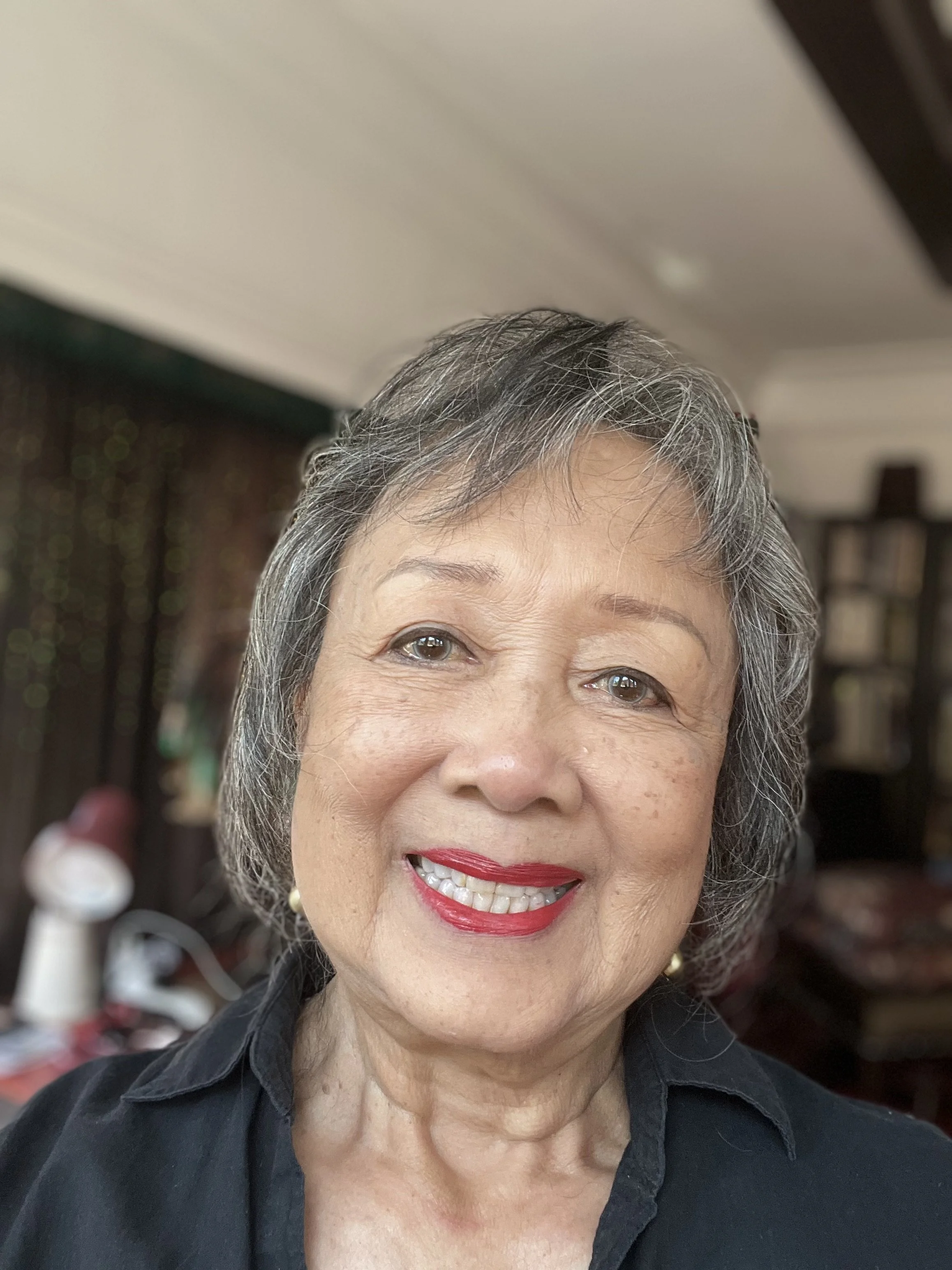
For Joselyn Geaga-Rosenthal, community is not an abstract idea—it is a lived experience shaped by migration, memory, and decades of service to Filipino Americans in Los Angeles. Her story is deeply intertwined with the history of Historic Filipinotown and the evolution of SIPA (Search to Involve Pilipino Americans), an organization she has supported since its earliest days.
From the Philippines to San Francisco: A Journey of Arrival
Joselyn’s journey to the United States began in 1965, when she and her family left the Philippines aboard one of the last trans-Pacific ship voyages, just as the jet age was beginning. The departure was bittersweet. On the pier, family members clutched colorful streamers that stretched across the gangplank—connections that would eventually snap (literally and figuratively) as the ship pulled away.
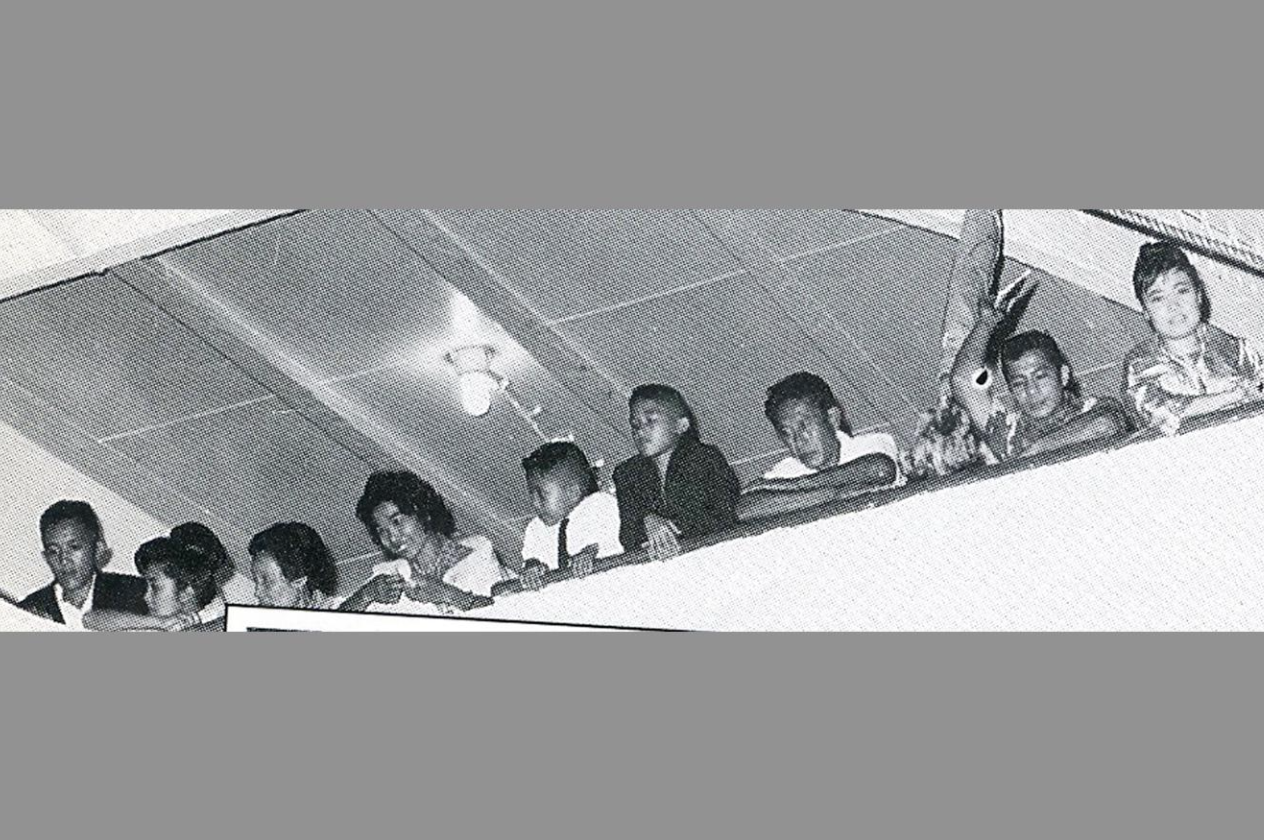
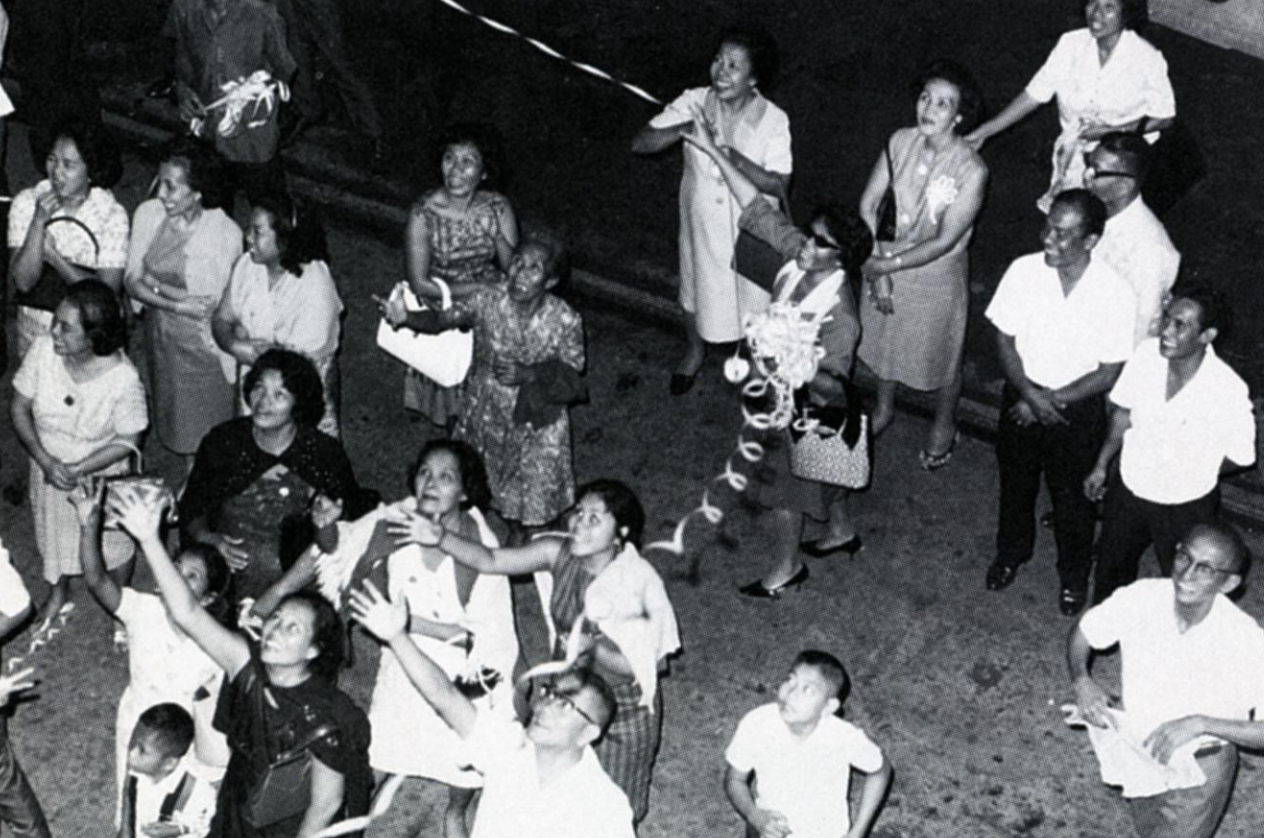
“It was the most visceral representation of the break from my birthplace,” she recalls.
After a 21-day voyage, the ship entered San Francisco Bay on New Year’s Day. Joselyn vividly remembers standing on deck as the Golden Gate Bridge came into view—seemingly floating on the ocean—before the ship passed directly beneath it. Moments later, San Francisco’s skyline appeared, marking the beginning of a new life.
An unexpected detail stayed with her: the first sign she noticed upon arrival was written in Ilocano. For a young immigrant, it was a startling reminder that Filipino presence already existed here. Soon after, the family made their way to Los Angeles, settling in what would later be known as Historic Filipinotown.
Her mother, Remedios “Remy” Vergara Gaega, was a fearless Filipino American community leader in the 60’s-80’s whose own legacy includes fighting for workers rights, WWII veterans rights, the designation of Historic Filipinotown, and so much more (read about Remy’s impact HERE).
Becoming Involved with SIPA
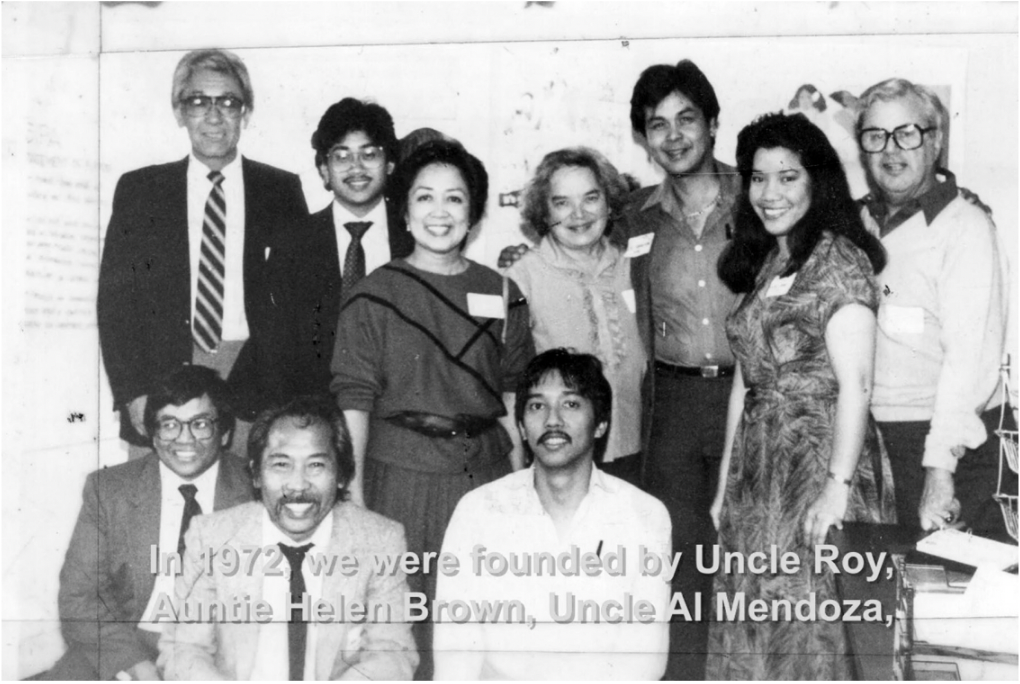
All photos provided by Jocelyn Gaega-Rosenthal archives.
Joselyn’s involvement with SIPA began in the early 1970s, when the organization was first established in Historic Filipinotown. At the time, many Filipino youth were struggling—with identity, with school, and with belonging. SIPA emerged as a response to these challenges, rooted in cultural pride and community care.
Working alongside community leaders like “Uncle Roy” Morales, Joselyn participated in early organizing efforts—volunteering, attending meetings, and helping shape programs aimed at youth empowerment. Fresh out of USC with a master’s degree in social work, she balanced her professional career with grassroots activism.
“SIPA started small—just a house, a handful of staff, and a big vision,” she says. “But it addressed something essential: identity.”
Over the years, her role evolved. She served as a volunteer, activist, consultant, and later as a clinical supervisor, mentoring younger social workers as they worked toward licensure. Her involvement spanned decades, even as SIPA moved locations and adapted to changing funding landscapes.
SIPA’s Impact on the Community—and on Her Life
For Joselyn, SIPA’s impact has always been reciprocal.
“SIPA enriched my life as much as I contributed to it,” she reflects.
As SIPA grew in stature and recognition, it became a pillar of Historic Filipinotown—supporting youth, families, seniors, and mental health initiatives. Its longevity stands as a testament to generations of leaders who gave, as Uncle Roy often said, their “time and treasure.”
Joselyn’s own career mirrors that commitment. She spent 33 years in public service with Los Angeles County, organizing and managing mental health and family services programs. After retiring in 2006, she began a second chapter as a licensed psychotherapist, working in wellness centers across several Los Angeles community colleges. There, she supported students one-on-one, integrating mindfulness and compassion into her practice.
Even in retirement, her engagement never stopped. Today, she remains active at the Griffith Park Senior Center—painting, dancing, playing guitar, practicing yoga, and participating in philosophical discussions with fellow seniors.
“Staying engaged is a form of resistance,” she says. “Mind, body, and spirit all matter.”
Sustaining the Legacy of SIPA and Historic Filipinotown
Looking ahead, Joselyn believes that sustaining SIPA’s legacy—and the future of Historic Filipinotown—depends on leadership grounded in patience, perspective, and community-mindedness.
She acknowledges that conflict and competition are inevitable within communities and organizations. But she believes lasting institutions are built brick by brick, through collaboration and shared purpose rather than zero-sum thinking.
“A good leader looks at the long view,” she explains. “You may not live to see the final result, but you build anyway—for your children, your grandchildren.”
Central to that future is youth development. Programs that foster cultural identity, historical awareness, and cross-cultural understanding are essential, she says—not only for young people, but for elders as well.
“It’s never too late,” Joselyn adds.
From crossing under the Golden Gate Bridge as a young immigrant to helping shape the institutions that define Filipino American life in Los Angeles, Joselyn Geaga-Rosenthal’s story is one of continuity, care, and commitment. Through SIPA and beyond, her legacy lives on in the people, programs, and places that continue to uplift the community she calls home.